Some sandals come and go. The Birkenstock Arizona has stayed on feet since 1973, and it still sells out every summer.
You have probably seen them on a barista, a nurse, a hiker at a trailhead, and a celebrity at an airport. That range is unusual for a two strap sandal that looks this plain.
So the real question for 2026 is simple. Do the Arizona sandals still earn their price, or are you paying for a logo and a long history?
This review covers fit, sizing, break in time, materials, durability, styling, and care, plus honest reasons to skip them.
By the end you will know which Arizona version fits your feet, your budget, and your daily routine.
Key Takeaways
- The cork and latex footbed molds to your foot. This is the core feature. After roughly two weeks of regular wear, the footbed holds an imprint of your arch, heel, and toes, which creates support that feels custom made.
- Break in time is real, so plan for it. The Regular Footbed feels firm at first. Most wearers need seven to fourteen days of short sessions before the sandal feels natural. The Soft Footbed skips most of that wait.
- Sizing runs in EU numbers, and width matters more than length. Each EU size covers a US whole and half size. Regular width suits medium to wide feet. Narrow width suits slim feet. Getting width wrong causes more complaints than getting length wrong.
- Material choice decides longevity. Suede and oiled leather age well and last years. Birko Flor costs less and feels comfortable right away. EVA is waterproof, light, and cheap.
- They last long enough to justify the price. Testers report five to thirty years of use across multiple pairs, and cobblers can resole them. Cost per wear drops fast when a sandal survives a decade.
- Traction is the weak point. The EVA outsole wears smooth over time and grips poorly on wet or technical ground. Keep them on sidewalks, floors, and easy paths.
Birkenstock Arizona Sandals Review 2026: The Short Verdict

- Two Individually Adjustable Straps
- Made In Germany
Last update on 2026-08-14 / Affiliate links / Images from Amazon Product Advertising API.
The Arizona remains one of the best value sandals you can buy in 2026. It supports your arch, holds your foot steady, and survives years of daily use.
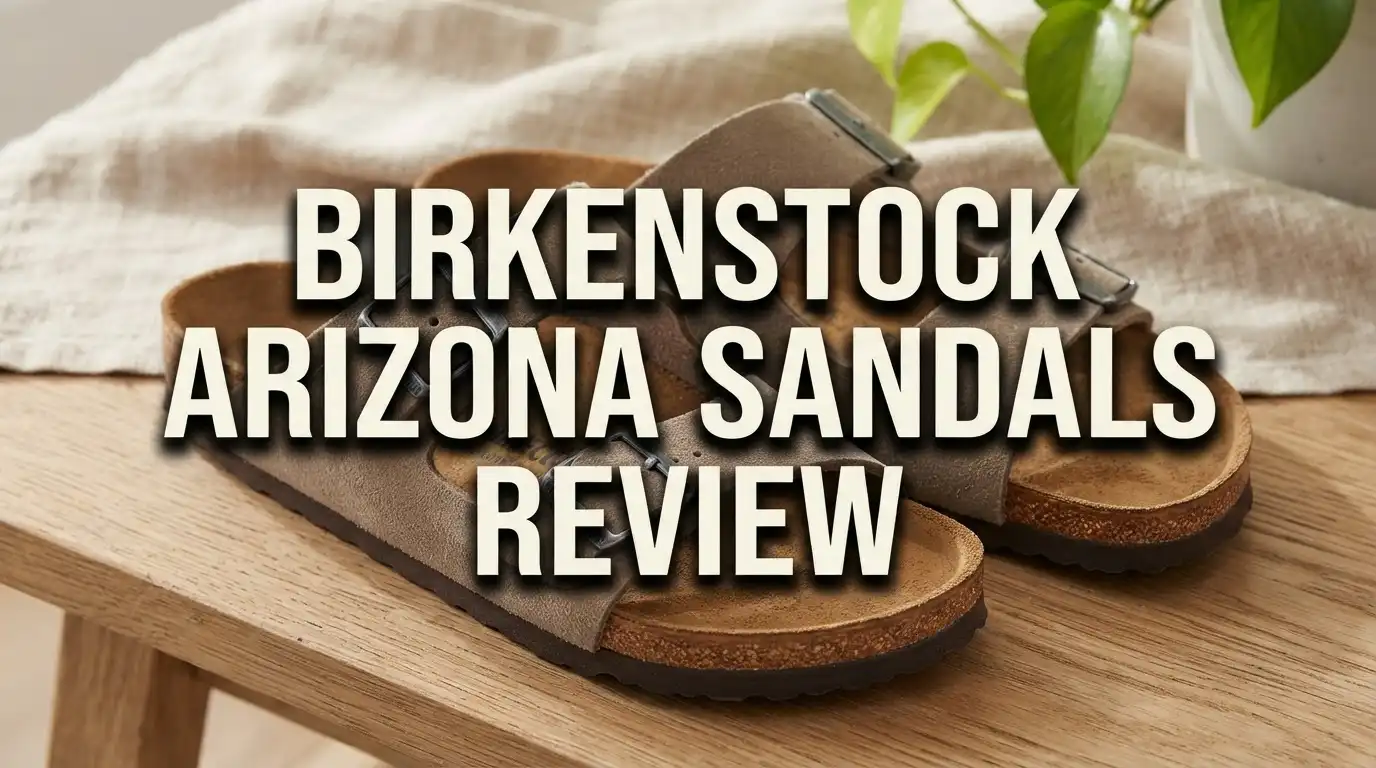
The design has barely changed in five decades. Two adjustable straps sit across the top of the foot, and a contoured cork footbed sits underneath.
That simplicity is the point. There is no gimmick here, no airbag, no carbon plate, and no marketing gadget.
The sandal works because the footbed copies the shape of a healthy footprint. Your heel sits in a cup, your arch rests on a raised ridge, and your toes grip a small bar at the front.
Prices in 2026 sit around $110 for Birko Flor, $155 for suede Soft Footbed, and near $50 for the EVA version. Those numbers place the Arizona above a beach flip flop and below most orthopedic footwear.
I would recommend them to anyone who stands all day, walks on hard floors, or wants a sandal that lasts more than one summer.
I would not recommend them to someone who wants pillow soft foam or a hiking sandal with grip. The Arizona trades plushness for structure.


Last update on 2026-04-05 / Affiliate links / Images from Amazon Product Advertising API.
That trade is the whole story. You get stability, shape, and lifespan instead of squish.
How the Cork Footbed Actually Works
The Arizona footbed uses four layers, and each one has a job. Understanding them explains why the sandal feels different from a foam slide.
The top layer is suede lining. It absorbs moisture and keeps your foot from sliding around during hot days.
Under that sits a jute fiber layer. Jute adds strength and pulls sweat away from the surface.
The middle layer holds the cork and natural latex blend. This is the part that molds to your foot. Body heat and pressure soften the cork slowly, and the material keeps the new shape.
A second jute layer sits below the cork for extra stability. The EVA outsole finishes the stack and absorbs shock from pavement.
The result is a footbed with four distinct zones. A deep heel cup centers your heel bone, a raised arch support lifts the middle of your foot, a transverse arch support sits under the ball, and a toe bar encourages your toes to grip.
Podiatrists often point to this shape as a reason the sandal helps people with plantar fasciitis. The arch support reduces strain on the plantar fascia during long standing sessions.
The zero drop platform keeps your heel level with your toes. Your foot lands naturally instead of tipping forward.


Last update on 2026-04-23 / Affiliate links / Images from Amazon Product Advertising API.
Cork does need care. Extreme heat, soaking, and long sun exposure dry it out and cause cracks, so treat the footbed like a natural material because that is exactly what it is.
Birkenstock Arizona Soft Footbed: Is the Upgrade Worth It?

- An icon of timeless design and legendary comfort, the Arizona sandal has...
- Contoured cork-latex footbed creates custom support with wear
Last update on 2026-08-14 / Affiliate links / Images from Amazon Product Advertising API.
The Soft Footbed adds a foam insert between the suede lining and the cork layer. That single change removes most of the break in pain.
Testers describe the Soft Footbed as comfortable straight out of the box. The arch still supports you, but the pressure feels gentle instead of sharp.
Choose Soft Footbed if you have sensitive feet, high arches, or nerve pain. Many first time buyers give up on Birkenstock because the Regular Footbed feels like a rock during week one, and the foam layer solves that problem.
There is a fit consequence though. The extra foam takes up volume inside the sandal, so the Soft Footbed can feel snug across the instep.
People with medium to wide feet or a high instep should stay in Regular width when buying Soft Footbed. Narrow width plus foam creates a tight squeeze.
The trade off shows up over years. Foam compresses and eventually flattens, while pure cork keeps rebuilding its shape.
Heavy daily wearers report the foam insert wearing thin and shedding after a few years of constant use. Regular Footbed pairs often outlive Soft Footbed pairs by a wide margin.
My take is practical. If you want instant comfort and plan to wear them casually, take the Soft Footbed.
If you want the longest possible lifespan and can handle two weeks of adjustment, take the Regular Footbed.
Top 3 Alternatives for Birkenstock Arizona Sandals

Last update on 2026-08-14 / Affiliate links / Images from Amazon Product Advertising API.

- Durable and skin friendly Birko-Flor upper
- Anatomically correct Birkenstock natural cork-latex footbed
Last update on 2026-08-14 / Affiliate links / Images from Amazon Product Advertising API.

Last update on 2026-08-14 / Affiliate links / Images from Amazon Product Advertising API.
Materials Guide: Birko Flor, Suede, Oiled Leather, and EVA
Birkenstock sells the Arizona in several upper materials, and the choice changes price, comfort, and lifespan. Here is how they compare in plain terms.
Birko Flor is a synthetic material with a smooth leather look. It costs less, wipes clean easily, and needs no conditioning.
Birko Flor feels comfortable on day one because the surface is soft and flexible. The downside shows up after a few years, since the coating can crack or peel at flex points.
Suede is soft napped leather with a matte finish. It molds around your foot, breathes well, and looks warmer than synthetic.
Oiled nubuck leather sits at the premium end. It is thick, water resistant, and develops a patina that many owners love.
Leather uppers last longer than Birko Flor, but they demand a bit of care. A brush and an occasional conditioner keep them healthy.
Birkibuc mimics nubuck texture using synthetic material. It gives you the suede look without animal products.
EVA is a single piece of molded foam. The whole sandal is waterproof, weighs about four ounces, and costs around $50.
EVA does not contour to your foot the way cork does. You get the shape and the support ridges, but not the custom mold.
My simple rule works for most buyers. Pick leather for daily long term wear, Birko Flor for budget and low maintenance, and EVA for pools, gardens, and travel.
Birkenstock Arizona Sizing: How to Get It Right
Birkenstock uses EU sizing, and each EU number covers a US whole size plus the half size above it. A size 39 fits US women 8 to 8.5 and US men 6 to 6.5.
Most wearers find the Arizona true to size. Some reviewers report the sandal running slightly large, so measure before you order.
The easiest method is the paper test. Stand on a sheet of paper, trace your foot, and measure from heel to longest toe in centimeters, then match that number to the Birkenstock size chart.
Leave about half a centimeter of space at the front and back. Your toes should never touch the raised toe bar.
Width matters just as much as length. Regular width suits medium and wide feet, while Narrow width suits slim feet.
Look at the footprint symbol stamped on the sole to identify width. A filled dark footprint means Narrow, and an outlined footprint means Regular.
Check three fit points once the sandal arrives. Your heel should sit inside the heel cup with a small gap behind it, your arch should rest on the ridge without pressure spikes, and your toes should curl slightly over the bar with room to spare.
Buckle adjustment fixes minor volume issues. Loosen both straps on hot days when feet swell and tighten them for walking.
Buy from a retailer with easy returns. Ordering two sizes and sending one back beats guessing.
The Break In Period: What the First Two Weeks Feel Like
New Arizona sandals feel firm, and that surprises many buyers. The cork has not softened yet, so the arch ridge presses into your foot.
Start with short sessions. Wear them one or two hours per day around the house for the first week.
Add time gradually instead of jumping into an eight hour shift. Your foot muscles need time to adapt to the arch support.
By day seven the footbed usually feels less rigid. By day fourteen the imprint of your heel and toes becomes visible on the suede lining.
Some mild arch soreness is normal during this phase. Sharp pain is not, and it usually signals the wrong width or the wrong size.
Socks help during break in. A thin pair reduces friction and softens the initial pressure without changing the fit.
Warm weather speeds the process. Body heat softens cork faster, so summer break in feels quicker than spring break in.
Skip the shortcuts you see online. Soaking the footbed, baking the sandals, or hammering the cork damages the material and shortens the lifespan.
The Soft Footbed version cuts this period down to a few days. The foam layer buffers the arch while the cork does its slow work underneath.
Patience pays off here. A properly broken in Arizona feels like a footbed built for one person only, and that person is you.
Durability and Long Term Value in 2026
The Arizona earns its reputation on lifespan. Long term testers report pairs lasting five, ten, and even thirty years with regular wear.
The outsole wears out first. The textured EVA bottom goes smooth over several years, and traction drops noticeably at that point.
Resoling solves that problem for a fraction of the price of a new pair. Cobblers who specialize in Birkenstock can replace the sole and the top lining while keeping your molded cork intact.
The cork layer stays serviceable far longer than most people expect. Sealed cork resists cracking as long as you avoid soaking and extreme heat.
Uppers vary by material. Leather straps outlast Birko Flor straps by a wide margin, and buckles rarely fail.
Do the math on cost per wear. A $155 pair worn 150 days a year for seven years costs about fifteen cents per day.
One caution deserves mention. Some owners in 2025 and 2026 posted about glue residue and uneven finishing on newer pairs, which suggests quality control varies between production batches.
Inspect your pair on arrival. Check the sole bond, the strap stitching, and the footbed edges before you wear them outside.
Return anything that looks sloppy. Retailers with generous return windows make this painless.
How to Style Birkenstock Arizona Sandals
The Arizona works because it stays neutral. The chunky silhouette contrasts with almost anything you already own.
Straight leg jeans and a plain tee remain the safest combination. Roll the hem once so the sandal shows.
Wide leg trousers pair well with the flat profile. The sandal grounds the outfit without competing for attention.
Midi dresses and slip dresses create a soft and rugged contrast that reads as intentional. Add a canvas tote and the look finishes itself.
Shorts work best above the knee with a longer top. That balance keeps the proportion from looking blocky.
Socks with Arizona sandals stopped being a joke years ago. Ribbed cotton or wool socks extend the sandal into cooler months and look deliberate.
Color choices matter more than you think. Black and mocha go with everything, taupe suits neutral wardrobes, and white brightens summer outfits.
Newer colorways in 2026 include softer tones and textured finishes for people who want something beyond the classics. The Big Buckle version adds an oversized hardware detail if you want a dressier take.
Keep the rest of the outfit clean. The sandal carries enough visual weight on its own.
Arizona vs Boston vs Gizeh: Which Birkenstock Fits You
All three share the same footbed, so the support feels identical. The difference lies in coverage and foot shape.
The Arizona uses two adjustable straps across the top. This gives you the most fit adjustment of the three styles.
Wide feet, swollen feet, and high insteps all do well in the Arizona because both buckles move independently. It is the most forgiving option.
The Boston closes the toe box completely. That extra coverage makes it a three season shoe rather than a summer only sandal.
Boston sizing runs a little different because your toes sit inside a closed vamp. Order carefully and leave a bit more room.
The Gizeh uses a thong design with a single vamp strap. It looks slimmer and dresses up more easily than the other two.
Gizeh suits narrow feet and anyone who dislikes bulk across the toes. The toe post takes a few days to adjust to.
Price differences are small. All three sit in a similar range depending on material.
Pick the Arizona for maximum adjustability and daily walking. Pick the Boston for cooler weather and indoor comfort.
Pick the Gizeh for warm evenings and a lighter look.
Care and Cleaning Tips That Extend the Lifespan
Good care doubles the useful life of these sandals. The routine takes minutes.
Brush the suede lining weekly with a dry suede brush. This lifts dirt out of the nap before it sets.
Never soak the footbed in water. Cork absorbs moisture, swells, and then cracks as it dries.
Clean the footbed with a slightly damp cloth and a small amount of mild soap. Wipe in small circles and let the sandal air dry away from direct sun.
Treat the exposed cork edges with cork sealer twice a year. Sealer keeps the material flexible and blocks moisture.
Condition leather uppers with a leather balm every few months. Birko Flor needs nothing more than a damp wipe.
Store the sandals in a cool dry place. Heat sources like car dashboards, radiators, and hot patios dry the cork fast.
Rotate between two pairs if you wear them daily. Rest days let sweat evaporate fully from the lining.
Deodorize with a light sprinkle of baking soda overnight. Brush it off in the morning.
Watch the outsole tread. Book a resole before the EVA wears through to the cork.
Pros and Cons of the Birkenstock Arizona
Here is the honest balance sheet after weighing years of owner feedback and tester reports.
Pros
- The cork and latex footbed molds to your foot and creates support that feels custom made after two weeks
- Deep heel cup and arch ridge provide real relief for plantar fasciitis and long standing shifts
- Two adjustable buckles let you fine tune the fit for swelling, socks, and different foot volumes
- Durability is excellent, with many owners reporting seven to thirty years of use
- The sandals can be resoled by a cobbler, which saves money and reduces waste
- Wide range of materials and widths, including vegan Birko Flor and Birkibuc options
- Zero drop platform keeps your foot in a natural position
- Neutral design pairs with nearly any casual outfit
Cons
- The Regular Footbed needs a break in period of one to two weeks and feels firm at first
- Cushioning is moderate rather than plush, so foam slide fans may feel disappointed
- The EVA outsole offers limited traction and wears smooth over time
- Price sits high compared with other casual sandals at $110 to $175
- Cork dislikes water, heat, and long sun exposure, so care is required
- EU sizing confuses first time buyers and often causes returns
- Recent reports mention inconsistent glue work and finishing on some newer pairs
- Not suitable for wet ground, muddy trails, or technical terrain
Who Should Buy the Arizona and Who Should Skip It
Buy the Arizona if you spend hours standing on hard floors. Nurses, teachers, retail staff, and cooks make up a large share of loyal owners for good reason.
Buy them if you have plantar fasciitis or flat arches. The arch ridge reduces strain on the plantar fascia and keeps your foot from collapsing inward.
Buy them if you want one sandal that lasts a decade. The cost per wear beats cheap sandals that die every August.
Buy them if you walk a lot on pavement, travel often, or want a slip on shoe for recovery after runs and hikes.
Skip them if you want maximum softness. Foam recovery slides feel far plushier straight out of the box.
Skip them if you need grip on wet rock, mud, or steep trails. The flat EVA outsole is not built for that.
Skip them if you cannot commit to a break in period. Firm arch support feels strange for the first week and some people never adapt.
Skip them if your feet are extremely narrow and you struggle to keep sandals on. The Mayari with its toe loop serves you better.
Budget shoppers have an easy answer. The Arizona EVA gives you the same shape and support for around a third of the price.
Final Verdict: Are Birkenstock Arizona Sandals Worth It in 2026?
Yes, for most people the Arizona is worth the money. The combination of anatomical support, adjustable fit, and long lifespan is hard to beat at this price.
The footbed is the reason. Nothing else in the casual sandal market molds to your foot the way cork and latex does.
Comfort arrives in two stages. The first stage feels firm and a little strange, and the second stage feels like the sandal was built for you.
Durability seals the argument. A sandal that survives seven years and then gets resoled costs less per day than a cheap pair replaced every summer.
The weak points are real but manageable. Traction fades, cork needs care, and sizing takes attention.
For 2026 my recommendation splits three ways. Choose the suede Soft Footbed if you want immediate comfort and can spend $155.
Choose the Birko Flor Regular Footbed if you want the classic look at a lower price and do not mind breaking them in. Choose the EVA version if you need something waterproof, light, and cheap.
Any of those three gives you the same core benefit. Your feet get support that improves with every mile.
That is a rare thing in footwear, and it explains why a 1973 design still sells out every year.
Frequently Asked Questions
Do Birkenstock Arizona sandals run big or small?
They generally run true to size, though some buyers find them slightly large. Each EU size covers a US whole size and the half size above it, so measure your foot in centimeters and compare it to the official chart before ordering.
How long does the break in period take?
Most people need seven to fourteen days of regular short wear. The Soft Footbed version shortens that to a few days because the foam layer buffers the arch pressure.
What is the difference between Regular and Soft Footbed?
The Soft Footbed adds a foam insert above the cork layer for immediate cushioning. The Regular Footbed has no foam, feels firmer at first, and typically lasts longer under heavy daily wear.
Can Birkenstock Arizona sandals get wet?
Leather and suede versions should stay dry because water damages cork and leather. The EVA version is fully waterproof and works fine at pools, beaches, and in gardens.
Are Arizona sandals good for plantar fasciitis?
Many wearers with plantar fasciitis report real relief thanks to the deep heel cup and pronounced arch support. Speak with a podiatrist before buying footwear for a specific medical condition.
How do I choose between Regular and Narrow width?
Regular width suits medium and wide feet, while Narrow width suits slim feet. Check the footprint symbol on the sole, since a filled footprint means Narrow and an outlined footprint means Regular.
Can Birkenstock Arizona sandals be repaired?
Yes. Cobblers who specialize in Birkenstock can replace worn outsoles and refresh the top lining while keeping your molded cork footbed intact.
How much do Arizona sandals cost in 2026?
Prices typically range from about $50 for the EVA version to roughly $110 for Birko Flor and around $155 to $175 for suede, oiled leather, and Big Buckle styles.
Is Birko Flor real leather?
No. Birko Flor is a synthetic material with a leather look, which makes it suitable for vegans and easy to clean, though it can crack over several years of hard use.
How should I clean the footbed?
Use a suede brush for dry dirt and a damp cloth with mild soap for stains. Let the sandal air dry away from direct heat and never submerge it in water.