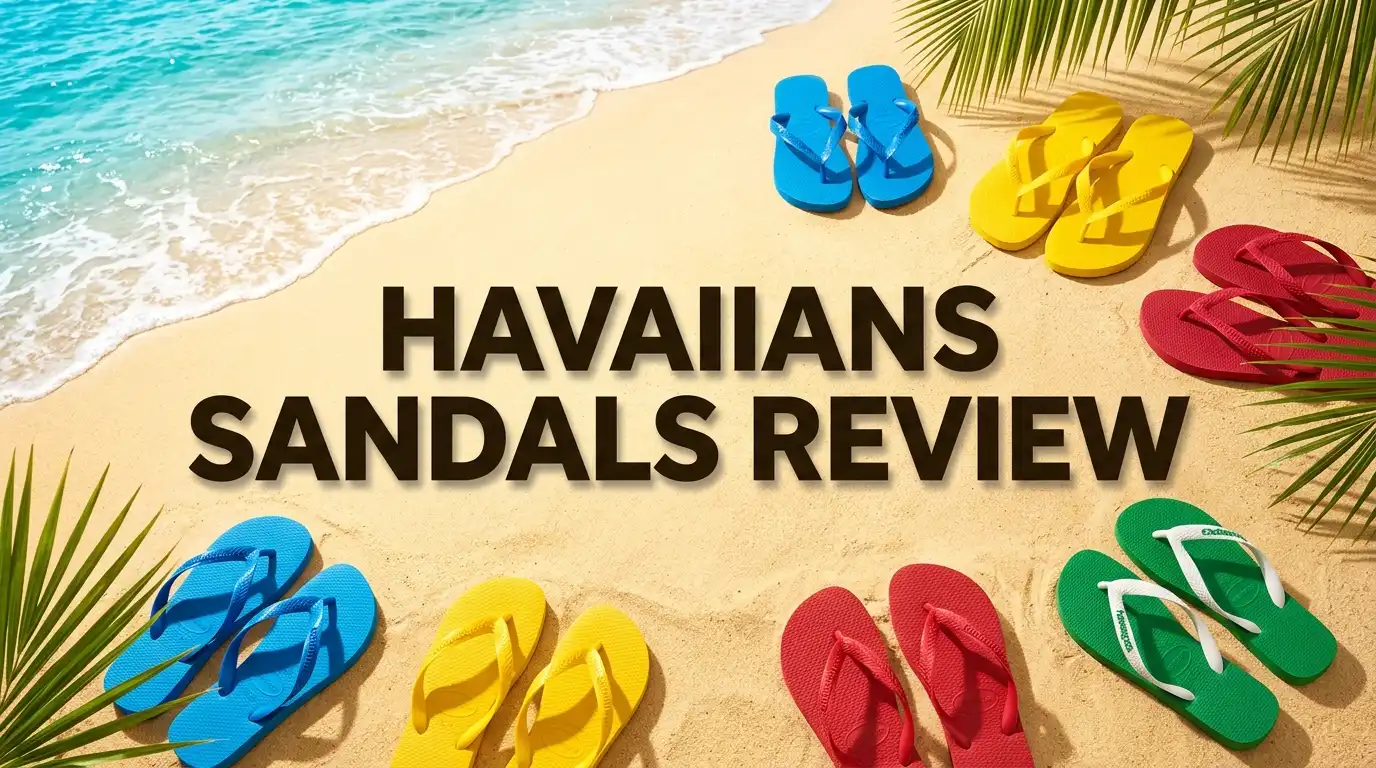
Havaianas sandals have survived every footwear trend since 1962. That alone says something. But surviving is not the same as being worth your money in 2026, and plenty of shoppers now ask a fair question: are these simple rubber flip flops still the smartest thirty dollars you can spend on summer footwear?
This review covers fit, grip, durability, sizing quirks, and the rubber quality debate that keeps showing up in online forums. You will know by the end whether Havaianas belong in your closet or whether your feet deserve something with real arch support.
Let’s get into it.
Key Takeaways
- Havaianas are rubber, not foam, and that single fact drives most of their value. Rubber resists compression, shrugs off saltwater, and outlasts cheap EVA foam sandals by several seasons. Testers routinely report two to three summers of regular use before the straps loosen or the sole thins out.
- Arch support is essentially zero, and Havaianas never claimed otherwise. The footbed is flat with a slight cushion. People with plantar fasciitis, flat feet, or long standing jobs will feel discomfort after a few hours of walking.
- Sizing runs in paired ranges like 7/8 and 9/10, which frustrates half size shoppers. The general rule is to size down if you fall on the lower number and size up if you have wide feet. Your foot should sit inside the sole edge, not hang over it.
- The textured rice pattern footbed is the unsung hero. It grips wet skin surprisingly well, so your foot does not slide around after you step out of the pool.
- Price sits between twenty five and forty dollars depending on the model and print. That places Havaianas in the sweet spot between disposable drugstore flip flops and premium sandals that cost eighty dollars or more.
- Choose the model by strap width, not by name. Top gives you a standard strap, Slim gives you a narrow strap, and Brasil Logo adds a flag detail with the same base sole.
Why Havaianas Still Matter in 2026
Havaianas started as a Brazilian copy of the Japanese zori sandal. The design borrowed the rice grain texture of woven straw and pressed it into rubber. That texture is still on every pair sold today.
The brand sells more than 200 million pairs a year across 130 countries. Scale like that keeps prices low and keeps the manufacturing consistent.
The 2026 lineup has not reinvented anything, and that is the point. Havaianas leans on a formula that works instead of chasing gimmicks like carbon plates or memory foam.
What changed recently is the competition. Archies built a business on flip flops with molded arch support. Crocs added memory foam. OluKai pushed contoured footbeds into the mainstream.
Havaianas answered by widening its color and print catalog rather than redesigning the sole. You now get everything from plain black to seasonal collaborations with fashion labels.
This makes the buying decision unusually clear. You are not choosing Havaianas for orthopedic performance. You are choosing them for weight, water resistance, durability, and price.
For beach trips, that combination is hard to beat. A pair weighs around six ounces, packs flat in a carry on, and dries in minutes.
The brand also holds a cultural position that no competitor matched. Havaianas are the default summer sandal in Brazil, Australia, and much of southern Europe.
That familiarity matters because sizing, fit, and quality are predictable. You know what you are getting before the box arrives.
Havaianas Top Review: The Original Unisex Model

- MENS TOP FLIP FLOP SANDALS: Whatever your style, there's a Top for you...
- DURABLE & VERSATILE: You can wear Havaianas wherever you want! They are...
Last update on 2026-08-14 / Affiliate links / Images from Amazon Product Advertising API.


Last update on 2026-04-05 / Affiliate links / Images from Amazon Product Advertising API.
The Top is the model that built the brand. It uses a standard width strap, a flat rubber sole, and the classic rice texture footbed.
I wore a black pair for six weeks straight. They handled sand, chlorine, salt water, and a few unplanned rain showers without any change in shape.
The strap is the star here. It is thicker than the Slim version, which spreads pressure across the top of your foot instead of concentrating it in one line.
That difference shows up around hour three. Thin straps start to dig in, while the Top strap stays comfortable for casual walking.
The sole measures roughly one centimeter thick. It absorbs enough shock for pavement but not enough for a long city day.
Flexibility is high, almost too high. You can roll these into a ball, which is great for packing and bad for foot support.
Traction on dry surfaces is solid. On wet tile, the outsole is adequate but not confidence inspiring, so slow down on pool decks.
The Top comes in a huge color range, including two tone options where the strap contrasts with the sole. Black, navy, and white sell fastest.
Break in time is zero. There is no stiff period and no blister phase, assuming you picked the right size.


Last update on 2026-04-23 / Affiliate links / Images from Amazon Product Advertising API.
Pros
- Thicker strap spreads pressure and reduces toe post irritation
- Pure rubber build resists salt water, chlorine, and sun cracking
- Weighs about six ounces per sandal and packs completely flat
- Unisex sizing and dozens of color options at one price point
- No break in period and no blisters for most wearers
Cons
- Flat footbed offers no arch support for long walks
- Paired sizing like 9/10 makes precise fit difficult
- Wet tile traction is average rather than excellent
- Toe post can loosen after heavy daily use across two seasons
Havaianas Slim Review: The Narrow Strap Favorite

- Slim Flip Flops for Women: These summer sandals feature thong-style straps...
- Durable Beach Sandals: Lightweight, waterproof sandals for women with...
Last update on 2026-08-14 / Affiliate links / Images from Amazon Product Advertising API.
The Slim is the same sandal with a narrower strap and a slightly thinner profile. Women buy this model most often, though the fit works for anyone with narrow feet.
The strap measures noticeably thinner than the Top. This creates a cleaner look that pairs better with dresses, linen pants, and swimwear.
The sole carries a subtle metallic or matte finish depending on the colorway. Rose gold, black, and sand tones dominate the bestseller lists.
I found the Slim slightly less comfortable for walking distances. Less strap surface means more pressure on the top of the foot.
For pool lounging, beach walks, and errands, the difference disappears. You only feel it after a mile or so.
Durability held up well. Independent gear testers report two full seasons of wear without a blowout, which matches my experience.
The rice pattern footbed does its job here too. My feet stayed planted even when soaking wet from the shower.
Sizing runs the same paired system, and it causes the most returns. If you wear a US 8, the 7/8 pair will feel snug and the 9/10 will feel roomy.
Most reviewers suggest sizing up when your foot is wide and sizing down when your foot is narrow. Your heel should not overhang the back edge.
Weight is even lower than the Top, which makes the Slim a favorite for travelers counting every ounce.
Pros
- Narrow strap creates a dressier silhouette for warm weather outfits
- Extremely light and flat for suitcase packing
- Rubber sole handles water without warping or absorbing odor
- Wide color selection including metallic finishes
- Same durability as the Top at a similar price
Cons
- Thin strap creates pressure points on longer walks
- No arch support and minimal cushioning
- Metallic finishes scuff visibly over time
- Narrow footbed feels tight for wide feet
Havaianas Brasil Logo Review: The Flag Edition
The Brasil Logo takes the Top sole and adds the Brazilian flag on the toe post strap. A striped midsole in green and yellow completes the look.
This model sells steadily because of the branding, not because of any performance change. The sole and footbed are identical to the Top.
The strap sits at standard width, so comfort matches the Top exactly. You get the same pressure distribution and the same zero break in experience.
I tested a black and white pair. The flag detail is printed, not stitched, and it held color well after repeated sun exposure.
The striped midsole is the visual signature people recognize from across the beach. It adds a small design element without changing the shape.
Durability tracks with the rest of the line. Rubber does not crack, the straps stay anchored, and the texture keeps gripping.
One note on comfort: the toe post on this model felt marginally firmer out of the box. It softened within two days of wear.
Color options are narrower than the Top or Slim. You mostly get navy, black, white, and the classic green and yellow combination.
Price sits at the same level as the standard Top, sometimes a dollar or two higher depending on the seller.
If you want the recognizable Havaianas look with a bit of national flair, this is the pick. If you want quiet minimalism, the plain Top serves better.
Pros
- Standard width strap keeps comfort equal to the Top model
- Distinctive striped midsole and flag toe post detail
- Same rubber durability and water resistance as the base model
- Unisex sizing with a clean, recognizable design
Cons
- Fewer color choices than the Top and Slim lines
- No functional upgrade over the standard Top
- Printed flag detail can fade slightly after heavy sun exposure
- Same flat footbed with zero arch support
Top 3 Alternative for Havaianas Sandals
Some feet need more than flat rubber. These three alternatives solve the problems Havaianas does not address, and each one targets a different weakness.
Rainbow Sandals Single Layer Premier Leather is the durability king. The leather footbed molds to your foot over months and many owners keep a single pair for a decade. It costs more upfront and it should stay out of the water, but the long term value is excellent.

- Single Layer Arch
- Premier Nubuck Leather
Last update on 2026-08-14 / Affiliate links / Images from Amazon Product Advertising API.
OluKai Ohana solves the arch support problem completely. The contoured footbed offers genuine anatomical shaping, the wide straps reduce toe post pressure, and the sandal is water friendly. It is heavier and slower to dry, but it is the pair to buy if you wear flip flops all day.

- TRUE TO SIZE: Wide fit, high arch, order your regular size. If you are...
- ALL-DAY COMFORT & ARCH SUPPORT: Features an anatomically contoured footbed...
Last update on 2026-08-14 / Affiliate links / Images from Amazon Product Advertising API.
Crocs Classic Flip delivers maximum cushioning at a mid range price. The Croslite foam feels plush from the first step and the sandal weighs almost nothing. Foam packs down faster than rubber, so expect a shorter lifespan than Havaianas.

- Add the functional Crocs Classic Flip 2.0 to your footwear collection.
- Size down a full size. If you are a size 8 normally, please order a size 7.
Last update on 2026-08-14 / Affiliate links / Images from Amazon Product Advertising API.
Pick Rainbow for longevity, OluKai for support, and Crocs for softness. Each one trades something away that Havaianas keeps, usually price or packability.
Comfort and Feel Underfoot
Comfort with Havaianas is a short conversation. The footbed is flat, the rubber is moderately soft, and there is no contouring anywhere.
For the first two hours, this feels fine. The rubber has enough give to soften pavement impact and the texture keeps your foot from sliding.
After two hours, feet with high arches start to complain. The lack of support forces your foot muscles to do all the work.
Flat footed wearers actually fare better here because their feet are already accustomed to minimal arch contact.
The toe post is the second comfort factor. Havaianas uses a soft rubber post that rarely causes the sharp rubbing you get from cheap sandals.
I did not develop a single blister during testing. That is not universal, but it is the common experience.
Heat matters too. Dark rubber absorbs sun and gets warm on hot pavement, though not to a painful level.
Rubber also stays flexible in cool weather rather than stiffening like some foam compounds.
The sandal does not retain water inside the footbed. There is no fabric or open cell foam to trap moisture, so odor buildup is minimal.
For beach days, pool afternoons, gym showers, and short errands, comfort is genuinely good. For a full day of walking a city, it is not enough.
Durability After a Full Season of Wear
This is where Havaianas earns its reputation. Rubber simply lasts longer than the foam used in most sandals under forty dollars.
Gear testers who wear these regularly report two to three seasons before replacement. My own pair showed no blowouts, no strap separation, and no sole cracking.
The most common failure point is the toe post plug pulling through the sole. This happens with heavy daily use over multiple years.
Sole wear is gradual rather than sudden. The rice texture flattens first, then the tread under the heel and ball thins out.
Sun exposure is the second enemy. Leaving them baking on a car dashboard all summer will accelerate rubber aging.
Strap stretch happens slowly. After a season or two, the straps sit a little looser than day one.
Saltwater and chlorine cause no measurable damage. Rinse them and they look new again.
Sand does not embed in the sole the way it does with foam. A quick rinse clears the texture completely.
There is an ongoing debate online about whether the rubber compound softened compared to older production runs. Some longtime buyers in Brazil argue quality dipped as the brand expanded its design catalog.
I cannot verify a formula change, but current pairs still outperform every foam competitor in the same price bracket.
Sizing Guide: How Havaianas Actually Fit
Sizing causes more returns than any other issue with this brand. The system uses paired numbers instead of single sizes.
You will see options like 5/6, 7/8, 9/10, and 11/12. Each pair covers two US sizes with one physical sole length.
The general rule is simple: size down if you are the lower number in the pair. A US 7 fits the 7/8 comfortably, while a US 8 will feel snug.
Wide feet should size up regardless of the rule. The footbed is narrow, especially on the Slim model.
Your heel and toes should sit fully inside the sole edge. Overhang looks wrong and wears the edge down faster.
Havaianas sizing also references Brazilian numbers on the packaging, which adds confusion. Ignore those and use the US range printed on the listing.
The straps do not stretch enough to fix a bad size. Rubber gives slightly but never enough to rescue a pair that is too small.
Kids sizes run on the same paired system. Parents usually size up because children grow through a pair within a season anyway.
If you fall between sizes and plan to wear socks, which some people do in cooler months, go up.
Try them on a hard floor first. The fit feel changes noticeably between carpet and tile.
Traction and Grip on Wet Surfaces
The rice pattern footbed handles wet feet extremely well. This is the underrated engineering detail of the whole design.
Your foot stays planted even when soaking wet. That texture creates thousands of tiny contact points instead of one slick surface.
The outsole is a different story. Havaianas uses a shallow tread that works fine on dry concrete and sand.
On wet tile, polished stone, or a soapy shower floor, grip becomes average. You will not fall, but you should walk deliberately.
Compare this to a dedicated water sandal and the gap is obvious. Sandals with siped rubber outsoles grip wet rock far better.
On sand, Havaianas perform well. The flat sole does not scoop sand and the rubber sheds it instantly.
Wet grass is manageable. Steep wet trails are not, and no flat flip flop should be used there anyway.
Rain is not a problem for the material itself. Rubber does not absorb water, so the sandal weight stays constant.
Boat decks work reasonably well thanks to the non marking rubber. Many sailors keep a pair aboard for this reason.
For gym showers and locker rooms, the closed rubber surface resists bacteria better than open cell foam. Rinse and dry them and they stay clean.
Havaianas vs Rainbow vs OluKai vs Crocs
Each competitor beats Havaianas in one area and loses in another. Here is how the comparison plays out.
Rainbow Sandals win on lifespan. Their layered leather footbeds mold to your foot and last for years, sometimes a decade. They cost roughly double and they hate water.
OluKai Ohana wins on support. The contoured footbed and wide straps make all day wear realistic. They are heavier, slower to dry, and cost around eighty dollars.
Crocs Classic Flip wins on softness. The foam feels plush immediately and the price is fair. Foam compresses over time, so the cushion fades faster than rubber wears.
Havaianas win on price, weight, packability, and water resistance combined. No other sandal in this group does all four at once.
Archies deserve a mention for budget arch support. They use dense foam with a molded arch and cost around forty dollars.
Teva Mush II is the closest budget rival. It uses soft foam that molds to your foot but wears out faster than rubber.
For a travel bag, Havaianas remain the smartest pick. They pack flat, dry instantly, and cost little enough to replace without stress.
For a daily driver in a warm climate, OluKai or Rainbow make more sense. Your feet will thank you after month three.
Buy based on how many hours per day you actually wear them. That single question sorts this comparison faster than any spec sheet.
Price and Value in 2026
Havaianas sit between twenty five and forty dollars depending on the model, print, and retailer. Basic solid colors sell at the low end.
Collaborations, metallic finishes, and licensed prints push toward the high end. The sole underneath is identical.
The value math is straightforward. Thirty dollars divided across two to three seasons works out to roughly ten to fifteen dollars per summer.
Compare that to a ten dollar foam pair that lasts one season and flattens by August. The rubber option wins on cost per wear.
Compare it to an eighty dollar OluKai that lasts five years and the math tightens considerably. Premium sandals can be cheaper long term if you wear them daily.
Sales are common in late summer. Discontinued colorways often drop below twenty five dollars.
Watch out for counterfeit listings. Genuine pairs have crisp logo printing, a clean rice texture, and consistent strap thickness.
Buy from the official brand store or a reputable seller. Fakes use softer rubber that flattens within weeks.
Shipping and returns matter given the sizing system. Order from a seller with free returns so you can exchange sizes without hassle.
For a beach vacation pair, thirty dollars is easy to justify. For an everyday walking sandal, spend more elsewhere.
Style, Colors, and Print Options
Havaianas built its modern business on color. The catalog now runs into hundreds of variations across models.
The Top comes in the widest range, including single tone, two tone, and seasonal prints. Black, navy, and white remain the safe picks.
The Slim leans into metallics and pastels. Rose gold and sand tones sell heavily to women shoppers.
The Brasil Logo owns the flag aesthetic with its green and yellow striped midsole.
Havaianas also releases collaborations each year with fashion labels and artists. These sell out fast and command higher prices.
Platform and wedge versions exist for shoppers who want height. The Luna adds an ankle strap for a more secured fit.
Slide versions remove the toe post entirely. These suit anyone who dislikes the between toe feeling.
Kids collections feature cartoon and character prints. They use the same rubber and the same sole texture.
Color fade is minimal on solid pairs. Printed pairs show slight fading after a full season in direct sun.
The minimalist silhouette works with shorts, swimwear, linen, and casual dresses. It does not work with anything formal.
Choose color by how much scuffing you can tolerate. White soles show marks fastest and black hides everything.
How to Care for Your Havaianas
Rubber needs almost no maintenance, but a few habits extend the lifespan meaningfully.
Rinse them in fresh water after beach or pool use. Salt and chlorine residue will not destroy rubber, but they leave a chalky film.
Use mild soap and a soft brush on the footbed. The rice texture traps dirt and body oils over time.
Never put Havaianas in a washing machine or dryer. Heat warps the sole and weakens the toe post plug.
Air dry them in shade. Direct sun for hours will slowly harden and fade the rubber.
Store them flat rather than folded. Long term folding creates a permanent crease across the arch area.
Keep them out of hot cars. A dashboard in July reaches temperatures that soften rubber and distort shape.
If the toe post starts pulling loose, you can sometimes reseat it by pushing the plug back through from below. This buys a few more weeks.
Scuff marks on light soles respond well to a magic eraser sponge. Work gently to avoid removing the texture.
Rotate between two pairs if you wear flip flops daily. Rubber recovers its shape better with rest days.
These small steps easily add a full season to your pair.
Who Should Buy Havaianas and Who Should Skip Them
Buy Havaianas if you want a reliable, cheap, water friendly sandal for casual summer use. They excel at exactly this job.
Beach trips, pool days, gym showers, boat decks, and short errands are the natural home for these sandals. They pack flat, dry fast, and cost little.
Travelers benefit most. A pair takes almost no suitcase space and survives salt water, sand, and hotel showers without complaint.
Budget conscious shoppers also come out ahead because the rubber outlasts every foam competitor at the same price.
Skip Havaianas if you have plantar fasciitis, flat feet with pain, or any condition requiring arch support. The flat footbed will make things worse.
Skip them if you plan to walk several miles a day. Your feet will fatigue quickly without contouring.
Skip them if you need serious wet traction for rocky shorelines or slick boat ramps. A siped outsole sandal handles that far better.
People with very wide feet should try before buying. The footbed runs narrow, especially on the Slim.
Anyone who hates toe posts should look at the slide versions instead. The Havaianas Slide keeps the same rubber with an open strap design.
Know your use case and the decision becomes obvious.
Final Verdict on Havaianas Sandals in 2026
Havaianas remain one of the best value purchases in summer footwear. The formula has not changed and it does not need to.
You get durable rubber, real water resistance, near zero weight, and a price that rarely exceeds thirty five dollars. That combination has no direct equal.
The tradeoff is honest and obvious. There is no arch support, no contoured footbed, and no premium cushioning.
Havaianas never pretended to offer those things. This is a flat rubber sandal executed extremely well.
For casual wear, travel, beaches, and pools, I recommend them without hesitation. The Top is the best all around choice thanks to its wider strap.
The Slim suits narrow feet and dressier outfits. The Brasil Logo adds visual character with identical performance.
If you wear flip flops for eight hours a day, spend the extra money on OluKai or Rainbow. Your arches deserve the upgrade.
Rating: 4.2 out of 5 for casual and beach use. The score drops to around 3 out of 5 for all day walking.
Buy a pair, rinse them after the beach, keep them out of hot cars, and expect two or three good summers.
That is a fair deal in 2026.
Frequently Asked Questions
Do Havaianas run true to size?
Havaianas use paired sizing like 7/8 and 9/10, which means one sole length covers two US sizes. If you are the lower number in the pair, the fit works well. If you are the higher number or have wide feet, size up. Your heel and toes should sit fully inside the sole edge with no overhang.
How long do Havaianas last?
Most wearers get two to three full seasons of regular use. Rubber resists compression far better than the EVA foam used in cheaper sandals. Heavy daily wear shortens this to about one or two seasons. The most common failure is the toe post plug pulling through the sole.
Are Havaianas good for plantar fasciitis?
No. Havaianas have a completely flat footbed with no arch support or heel cup. Anyone managing plantar fasciitis should choose a sandal with a contoured footbed, such as the OluKai Ohana or a molded arch option like Archies. Havaianas can worsen heel pain during long wear.
Can you wear Havaianas in water?
Yes. The sandals are made from solid rubber that does not absorb water, salt, or chlorine. They dry within minutes and resist odor because there is no fabric or open cell foam inside. Rinse them with fresh water afterward to remove any residue.
What is the difference between Havaianas Top and Slim?
The Top uses a standard width strap and a slightly thicker sole. The Slim uses a narrower strap with a thinner profile and a more delicate look. Both share the same rubber compound and rice pattern footbed. The Top is more comfortable for longer walks because the wider strap spreads pressure.
Are Havaianas worth the price in 2026?
For casual and beach use, yes. At twenty five to forty dollars across two or three seasons, the cost per wear beats cheaper foam sandals that flatten within one summer. For daily all day wear, a premium supportive sandal offers better long term value despite the higher upfront price.
How do you clean Havaianas?
Use warm water, mild soap, and a soft brush on the footbed and straps. Rinse thoroughly and air dry in shade. Never use a washing machine or dryer because heat warps the sole. A magic eraser sponge removes scuff marks from light colored soles.
Do Havaianas cause blisters?
Rarely. The toe post uses a soft rubber that flexes rather than rubbing sharply, and there is no break in period. Blisters usually indicate the wrong size. If the sandal is too small, the strap pulls tight across the foot and creates friction points.