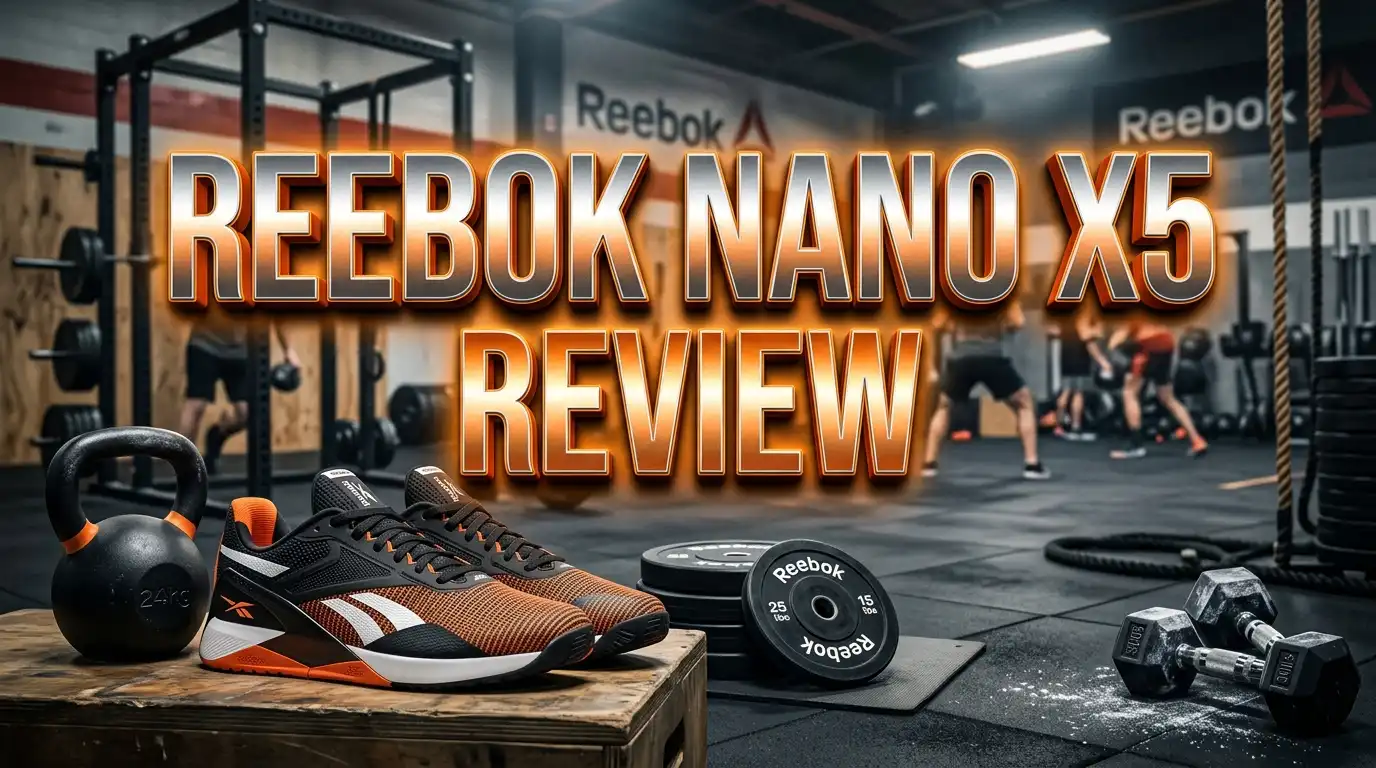
Are you looking for a gym shoe that handles everything from heavy squats to treadmill sprints? The Reebok Nano X5 might be exactly what you need.
This shoe has been one of the most talked about cross-training shoes since its release, and for good reason. It builds on the legendary Nano line with a brand new DualResponse midsole, an updated Flexweave upper, and improved forefoot cushioning.
But does it truly live up to the hype? I’ve spent weeks testing this shoe across multiple workout styles to bring you an honest, in-depth look.
Whether you’re a CrossFit enthusiast, a general gym-goer, or someone who wants one shoe to do it all, this review covers everything. Keep reading to find out if the Reebok Nano X5 deserves a spot in your gym bag.
Key Takeaways
- The DualResponse midsole uses firmer foam in the heel and softer foam in the forefoot. This gives you stability for lifts and comfort for cardio in a single shoe.
- Durability is outstanding. The Flexweave upper scored a 4 out of 5 in abrasion testing. The outsole rubber measures a thick 4.1 mm, which means this shoe will last through months of hard training.
- Stability is best in class. The Nano X5 scored a perfect 5 out of 5 for torsional rigidity. It resists twisting better than almost every other cross-trainer on the market right now.
- The shoe weighs 12.0 oz (340g), which is slightly heavier than the category average of 10.8 oz. It’s not the lightest option, but the extra weight supports its durability and stability.
- It retails at $150, which is above the average cross-trainer price of $126. However, the performance and build quality justify the price for serious athletes.
- Fit runs slightly narrow at the widest point (93.8 mm vs. the 96.4 mm average). People with wide feet may want to try them on before buying.
Reebok Nano X5 Overview and First Impressions

- CLASSIC REEBOK DESIGN - To celebrate the 15th anniversary of these iconic...
- HIGH PERFORMANCE - The dual-density midsole with firmer foam in the heel...

Last update on 2026-06-08 / Affiliate links / Images from Amazon Product Advertising API.
The Reebok Nano X5 makes a strong first impression right out of the box. The shoe looks clean and modern. It has sharp lines, a structured silhouette, and a premium feel to the materials.
You immediately notice the updated Flexweave upper. It feels thick and tough compared to the Nano X4. The weave pattern is tighter, giving the shoe a more durable exterior.
The midsole has a visible two-tone design that hints at the DualResponse technology inside. The heel area feels firm and planted. The forefoot has a softer, more responsive touch.
Reebok priced this shoe at $150, matching the Nano X4. There was no price increase, which is a welcome surprise in a market where shoe costs keep rising. The shoe is available in several colorways for both men and women.
DualResponse Midsole Technology Explained
The biggest upgrade in the Nano X5 is the DualResponse midsole system. Reebok used two different foam densities in one shoe. The heel contains a firmer foam compound that measures 49.2 on the durometer scale.
This firm heel foam gives you a solid, grounded base for squats, deadlifts, and cleans. Lab tests show the shoe handles loads up to 220 lbs (100 kg) without concerning compression.
The forefoot uses a softer, more responsive foam that measures 33.7 on the durometer. This softer compound improves shock absorption for running, jumping, and plyometric movements. Forefoot shock absorption improved from 66 SA in the Nano X4 to 71 SA in the X5.
This dual-density approach is smart. It means you no longer need to sacrifice lifting stability for cardio comfort. The Nano X5 handles both tasks in a single shoe.


Last update on 2026-04-05 / Affiliate links / Images from Amazon Product Advertising API.
Stability and Support for Lifting
The Reebok Nano X5 excels at stability. This is the shoe’s strongest feature. It scored a perfect 5 out of 5 for torsional rigidity in lab testing. That is the highest possible score.
The shoe resists lateral twisting better than the Nano X4. Reebok replaced the old Lift and Run Chassis with a new TPU caging system. Despite this change, the shoe feels equally secure during side-to-side movements.
A stiff heel counter adds extra lockdown around the back of the foot. It scored 4 out of 5 for heel counter stiffness. Your foot stays put during heavy lifts and explosive movements.
The heel midsole width measures 86.0 mm, which gives you a broad platform for squats and presses. The forefoot platform is 110.4 mm wide, matching the category average. You feel planted and confident during every rep.
Top 3 Alternatives for Reebok Nano X5
If the Nano X5 doesn’t match your needs, here are three strong alternatives worth considering.
Nike Metcon 10 is the Nano X5’s biggest rival. It weighs less at 11.0 oz and offers a wider midsole. It also has a broader toebox. If you want a lighter shoe with more foot room, the Metcon 10 is a great pick.

- The open-holed engineered mesh provides breathability.
- The midsole rubber wrap is more tuned, lighter and less bulky than the...
Last update on 2026-06-08 / Affiliate links / Images from Amazon Product Advertising API.
NOBULL Outwork Shoe is a favorite among CrossFit athletes. It offers a flat, firm platform for heavy lifting. The carbon rubber outsole provides excellent grip. It’s built to be nearly indestructible.

- OG LIFTING SHOE: Built for grip, stability, and durability, the Men's...
- STABILIZE YOUR STANCE: Flat, firm, and low to the ground, these...
Last update on 2026-06-08 / Affiliate links / Images from Amazon Product Advertising API.


Last update on 2026-04-23 / Affiliate links / Images from Amazon Product Advertising API.
Inov-8 F-Lite G 300 uses a graphene-enhanced outsole for extreme durability and grip. It’s lighter than the Nano X5 at 10.5 oz. It also has a lower profile that gives you better ground feel during lifts.

- SOCK-LIKE FIT Comfort, ease and support all rolled into one sock-like...
- GRAPHENE POWERHEEL Providing a stable lifting foundation so you can...
Last update on 2026-06-08 / Affiliate links / Images from Amazon Product Advertising API.
Cushioning and Comfort for Cardio
Reebok set out to make the most comfortable Nano ever. The forefoot cushioning upgrade makes a real difference during cardio portions of workouts.
The softer forefoot foam produces 58.4% energy return. This adds a springy feel during burpees, box jumps, and treadmill runs. You feel a noticeable pop at toe-off that the older Nanos lacked.
The heel offers 53.1% energy return, which keeps the rearfoot grounded and stable. This lower bounce in the heel is intentional. It prevents any wobble during heavy lifts.
The heel stack height measures 27.0 mm and the forefoot sits at 18.9 mm. This gives you an 8.1 mm heel-to-toe drop. The drop feels natural for both running and lifting. It doesn’t push you too far forward during squats, and it doesn’t feel too flat for short runs.
Flexweave Upper: Durability and Fit
The updated Flexweave upper is one of the toughest materials on any cross-training shoe. Lab abrasion tests gave the toebox a durability score of 4 out of 5. The heel padding scored the same.
This means rope climbs, wall balls, and burpees won’t destroy the upper quickly. The interlocking weave of plastic fibers and thick threads creates a dense, protective shell around your foot.
However, this dense construction has a trade-off. Breathability drops to a 3 out of 5. Air channels are small and limited to the toebox area. Your feet may run warmer during long, high-intensity sessions.
The shoe’s internal width measures 93.8 mm at its broadest point. This is narrower than the Nike Metcon 10 at 99.4 mm. People with average or narrow feet will find a snug, secure fit. Wide-footed athletes should try before buying.
Outsole Grip and Traction Performance
The Nano X5’s outsole uses a Metasplit design with deep horizontal and vertical slits. These grooves improve forefoot flexibility and help the shoe bend during lunges and sled pushes.
Lab traction tests on wet concrete showed a friction coefficient of 0.25. This is lower than the Nano X4’s score of 0.33. The grip has decreased compared to the previous model.
On dry gym surfaces like rubber mats, hardwood floors, and plyo boxes, the shoe grips well. You won’t have issues during most indoor workouts.
The outsole rubber measures a thick 4.1 mm. The category average is 3.6 mm. This extra rubber means the outsole will wear down slowly. Lab abrasion tests showed only 1.0 mm of wear, which matches the average for cross-trainers.
Weight: How Does the Nano X5 Compare?
The Reebok Nano X5 weighs 12.0 oz (340g) in a men’s size 9. That is heavier than the cross-trainer average of 10.8 oz (305g). It is also slightly heavier than the Nano X4 at 11.7 oz.
You feel the extra weight during longer cardio segments. Quick footwork drills, double unders, and running WODs can feel slightly sluggish compared to lighter options like the Nike Free Metcon 6.
The added weight comes from the shoe’s dense Flexweave upper and thick rubber outsole. These materials improve durability and stability at the cost of speed.
If shoe weight is your top priority, the Nike Metcon 10 at 11.0 oz or the Inov-8 F-Lite G 300 at 10.5 oz are lighter choices. But for most gym-goers, the 12 oz weight won’t be a deal-breaker.
Sizing and Fit Guide

- Upper material: Flexweave
- Lining material: Textile
Last update on 2026-06-08 / Affiliate links / Images from Amazon Product Advertising API.
The Reebok Nano X5 fits true to size for most people. The internal length measures 267.8 mm in a US men’s size 9, which is close to the 269.1 mm average.
The toebox width is 73.6 mm, which matches the category average. Your toes have enough room to splay during lifts without feeling cramped.
Toebox height is 23.9 mm, which is lower than the 27.0 mm average. Some athletes with taller toes may feel a slight squeeze on top of the foot.
The shoe features a fully gusseted tongue that connects to the upper on both sides. This prevents the tongue from sliding during lateral movements. It also creates a sock-like fit that locks your midfoot in place.
If you have wide feet, consider going up a half size. The shoe’s narrow midfoot can feel tight for wider foot shapes. Reebok currently does not offer a wide-width version of the Nano X5.
Running in the Reebok Nano X5
The Nano X5 handles short runs better than any previous Nano model. The softer forefoot foam provides real impact protection at the ball of the foot. You can comfortably run 1 to 3 miles without discomfort.
The 8.1 mm heel-to-toe drop supports a natural running gait. Your heel strike transitions smoothly into a toe-off. The forefoot energy return of 58.4% adds a bit of spring to each stride.
However, the shoe has limits as a running shoe. It requires 12.2 Newtons of force to bend the forefoot by 30 degrees. This is stiffer than the average cross-trainer. Longer runs may fatigue your calves and feet.
The 12.0 oz weight also holds the shoe back for distance running. If your WODs regularly include runs over 1 mile, the Nano X5 handles it. For dedicated running sessions, a proper running shoe is still the better choice.
CrossFit WOD Performance
The Nano X5 is built for CrossFit workouts. It handles the varied demands of a WOD better than most shoes. Squats feel stable thanks to the firm heel foam and wide platform.
Box jumps and burpees benefit from the softer forefoot cushioning. You feel less impact on landings and more energy on takeoffs. Rope climbs are safe because the Flexweave upper resists abrasion from the rope.
Wall balls, thrusters, and cleans all feel solid. The shoe’s 5/5 torsional rigidity keeps your foot centered during rotational and lateral movements. There is no unwanted twisting or rolling.
The fully gusseted tongue stays in place throughout the entire workout. You won’t need to stop and readjust your shoe between exercises. The Nano X5 lets you focus on the workout, not your footwear.
Reebok Nano X5 vs Nike Metcon 10
These are the two biggest cross-training shoes on the market. They compete directly for the same audience. Here is how they compare.
The Metcon 10 is lighter at 11.0 oz vs the Nano X5’s 12.0 oz. It also has a wider midsole and a more accommodating toebox. Athletes with wider feet often prefer the Metcon.
The Nano X5 wins on stability. Its 5/5 torsional rigidity beats the Metcon. The heel counter is also stiffer. If heavy lifting is your focus, the Nano X5 has the edge.
For forefoot cushioning, the Nano X5 now matches or beats the Metcon 10. The DualResponse midsole closes the comfort gap that existed in previous generations.
The Metcon 10 has better outsole traction on wet surfaces. Its forefoot is also more flexible, making it a better choice for athletes who prioritize agility over stability.
Durability: Will the Nano X5 Last?
Durability is a major strength of the Reebok Nano X5. The shoe is built to survive heavy use over many months.
The Flexweave upper scored 4/5 in toebox durability and 4/5 in heel padding durability. The thick weave resists cuts, scrapes, and wear from ropes and rough surfaces.
The outsole rubber at 4.1 mm thick is well above average. Lab testing showed only 1.0 mm of wear after abrasion tests. This suggests the outsole will hold up through hundreds of workouts.
The insole measures 3.9 mm thick and is removable. You can replace it with a custom orthotic or swap in a fresh insole as the original breaks down. This extends the shoe’s usable life significantly.
Pros and Cons of the Reebok Nano X5
Pros: The shoe delivers excellent stability for lifting. The DualResponse midsole gives you both heel firmness and forefoot comfort. Durability scores are high across the upper, heel padding, and outsole. The gusseted tongue creates a secure midfoot fit. The removable insole allows custom orthotics.
Cons: The shoe is heavier than average at 12.0 oz. Breathability scores below average at 3/5. The midfoot width is narrower than the competition. Outsole traction on wet surfaces dropped compared to the Nano X4. The forefoot is slightly stiff for running.
Overall, the strengths far outweigh the weaknesses. The Nano X5 is one of the most complete cross-training shoes available right now. It works for lifting, CrossFit, HIIT, and short cardio sessions.
Who Should Buy the Reebok Nano X5?
The Nano X5 is a perfect match for CrossFit athletes who need one shoe for every workout. It handles lifting, jumping, running, and climbing without compromise.
General gym-goers who split their time between weight training and cardio will love this shoe. The DualResponse midsole adapts to both activities. You don’t need separate shoes for leg day and treadmill day.
If you value durability above all, this shoe delivers. The Flexweave upper and thick rubber outsole are built to last. Budget-conscious buyers who want a shoe that won’t need replacing for a long time will appreciate the $150 investment.
Athletes with narrow to average-width feet will find the best fit. Wide-footed buyers should try the Nike Metcon 10 or go up half a size in the Nano X5.
Final Verdict: Is the Reebok Nano X5 Worth It in 2026?
The Reebok Nano X5 is one of the best cross-training shoes you can buy in 2026. It improves on the Nano X4 in the areas that matter most: cushioning, stability, and durability.
The DualResponse midsole is the standout feature. It solves the classic problem of choosing between lift stability and cardio comfort. You get both in one shoe now.
Yes, the shoe is heavier than some rivals. And yes, the breathability could be better. But these are minor trade-offs for the overall performance package.
At $150, it represents solid value for a flagship training shoe. If you train hard, train often, and want a shoe that keeps up with everything you throw at it, the Reebok Nano X5 earns a strong recommendation.
Is the Reebok Nano X5 Good for Beginners?
Yes. The Nano X5 is a great choice for beginners. Its stability features protect your feet during new movements. The cushioning keeps you comfortable as you build up training volume.
The shoe’s versatility means you only need one pair for the gym. You don’t have to invest in separate lifting shoes and running shoes right away. The Nano X5 handles both tasks well enough for someone starting their fitness journey.
The $150 price may seem high for a beginner. But the durability ensures you won’t need a replacement anytime soon. It’s a one-time purchase that supports your first year of training and beyond.
FAQ
Is the Reebok Nano X5 true to size?
Yes, the Reebok Nano X5 fits true to size for most people. The internal length is close to the cross-trainer average. If you have wide feet, consider going up half a size because the midfoot area runs slightly narrow.
Can you run in the Reebok Nano X5?
You can run short distances of 1 to 3 miles comfortably. The softer forefoot foam provides good impact protection. However, the shoe is stiffer and heavier than a dedicated running shoe. It’s best for WOD runs and quick treadmill sessions, not long-distance training.
How does the Nano X5 compare to the Nano X4?
The Nano X5 improves forefoot cushioning with the DualResponse midsole. It has better torsional rigidity at 5/5 vs 4/5. The Flexweave upper is more durable. However, the X5 is slightly heavier and has lower outsole traction on wet surfaces.
Is the Reebok Nano X5 good for wide feet?
The Nano X5 has a narrower midfoot than average at 93.8 mm. The toebox width is average at 73.6 mm. Athletes with very wide feet may feel restricted. The Nike Metcon 10 offers more width and may be a better option for wide-footed buyers.
How much does the Reebok Nano X5 cost?
The Reebok Nano X5 retails at $150. This is the same price as the Nano X4. It costs more than the average cross-trainer at $126, but the build quality and performance justify the premium price.
Is the Reebok Nano X5 good for lifting heavy?
Yes. The firm heel foam and 5/5 torsional rigidity make it excellent for heavy lifts. Lab tests confirmed the shoe handles loads up to 220 lbs (100 kg) without excessive compression. The wide heel platform provides a stable base for squats, deadlifts, and Olympic lifts.